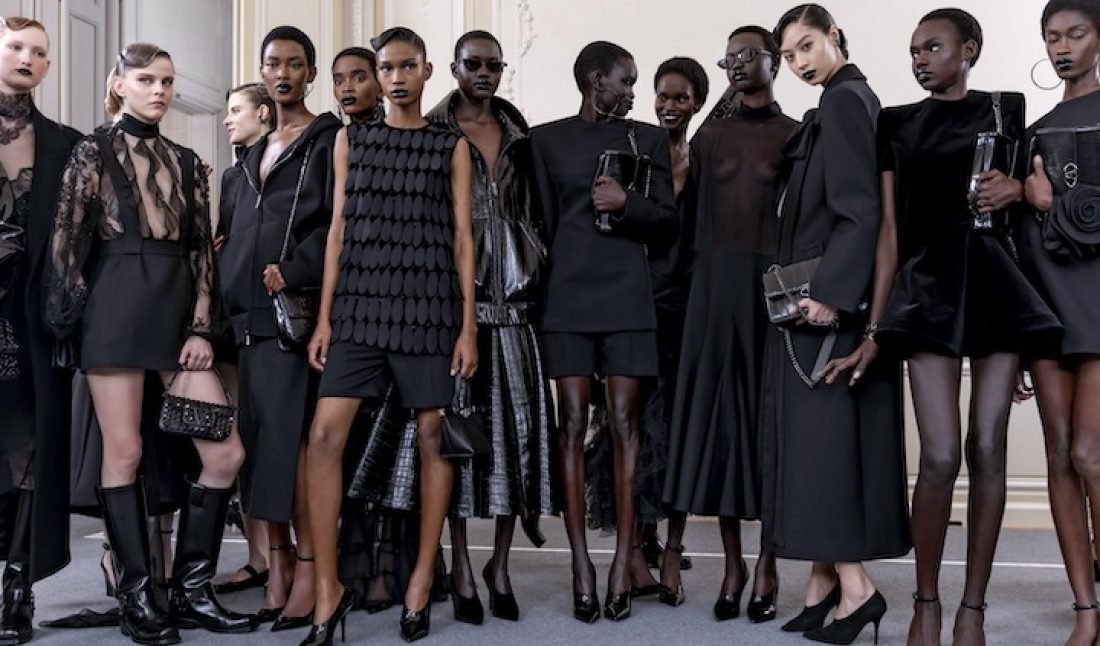
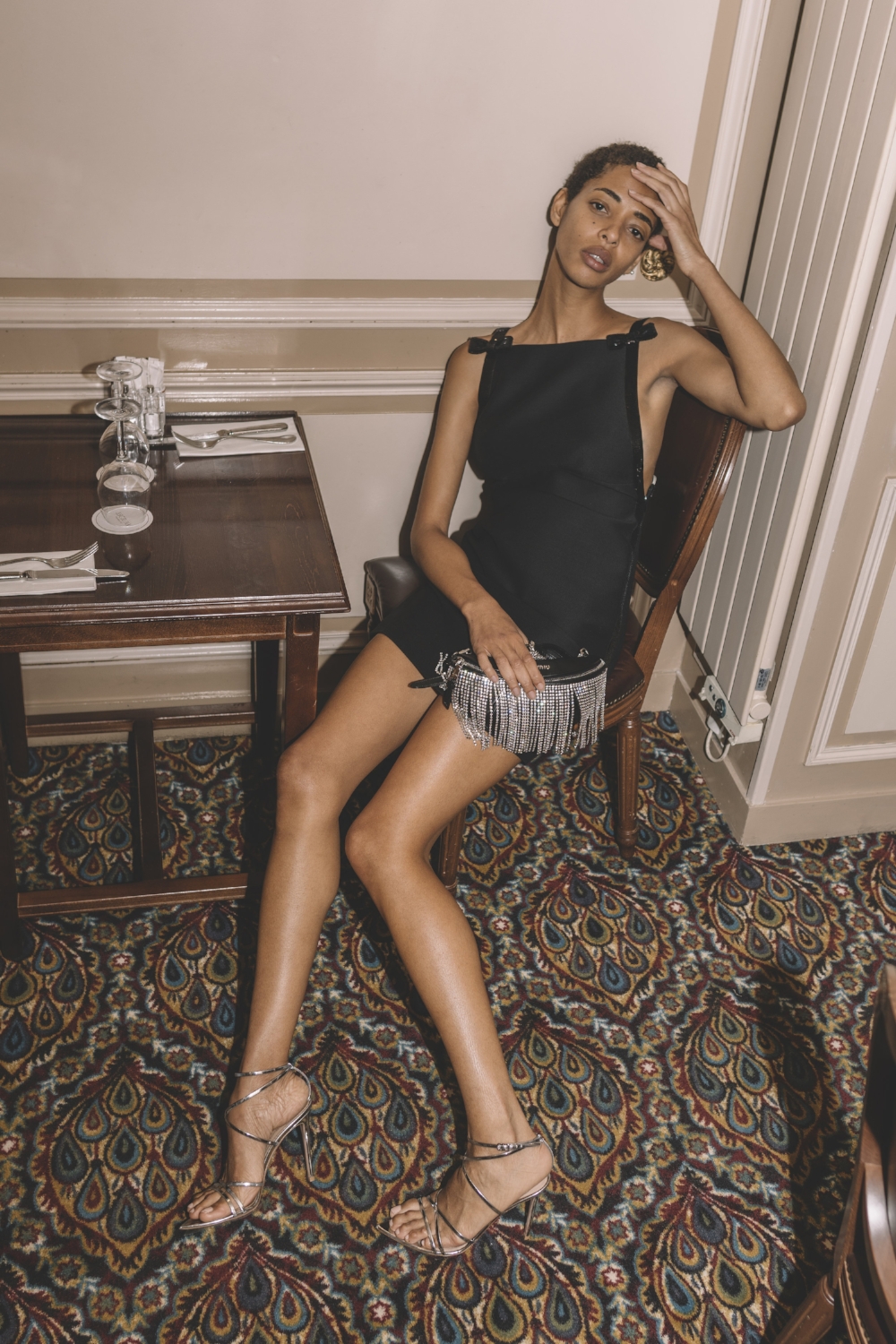
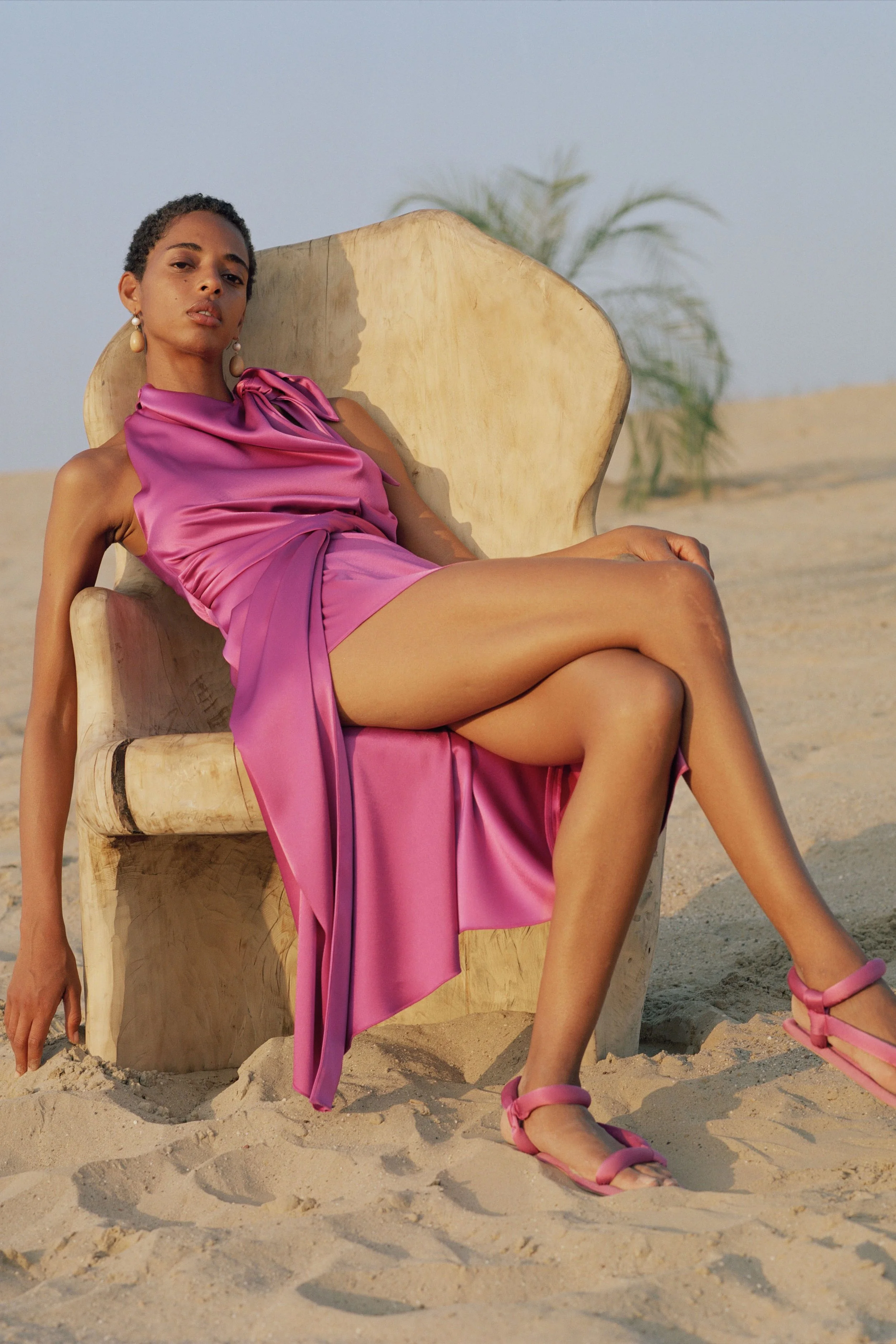
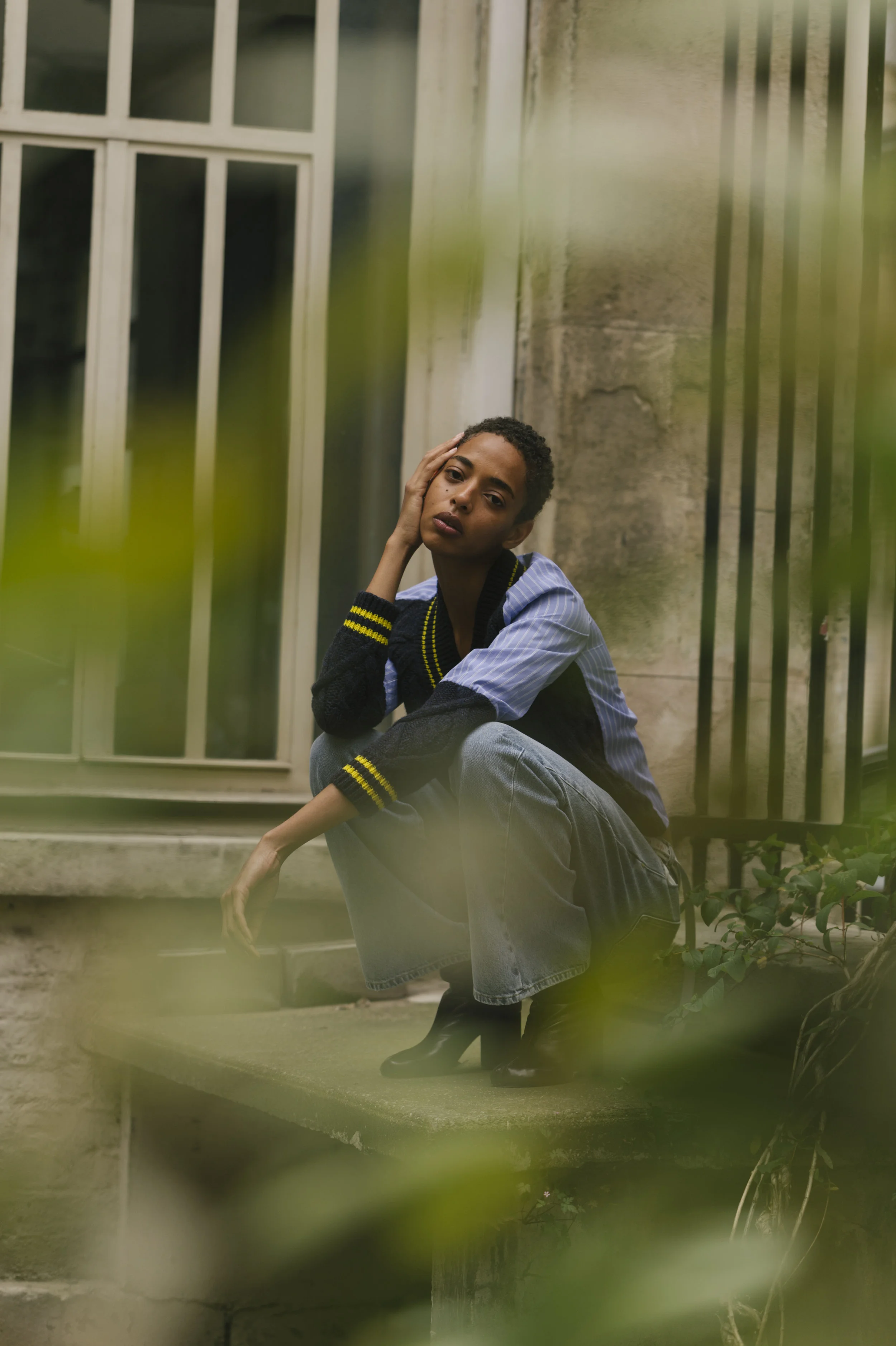
In France, fashion is finally celebrating textured hair, but boldness is lacking. Neat curls, controlled afros—where are the sculptural hairstyles, the raw cuts, the artistic vision? Diversity does not rhyme with uniformity. When hairstylists don’t know how to work with natural hair, everyone suffers.
Why does fashion fail to support Black models with textured hair ?
Fashion shows and campaigns are becoming increasingly inclusive, welcoming more Black models on the runway (although other ethnicities are still underrepresented). Add to this the slow, but steady, increase in the number of makeup artists and hairstylists from minority backgrounds, finally ensuring foundation shades that match and hairstyles that respect every hair texture. One could believe that diversity is truly progressing in the industry, but one inequality persists: the difference between the hairstyles of Black and White models.
Afro hair is incredibly versatile. It can be sculpted, amplified, and styled in countless ways. But instead of celebrating it, the hair choices of brands seem to aim at containing it. Why not grant the same freedom to textured hair?
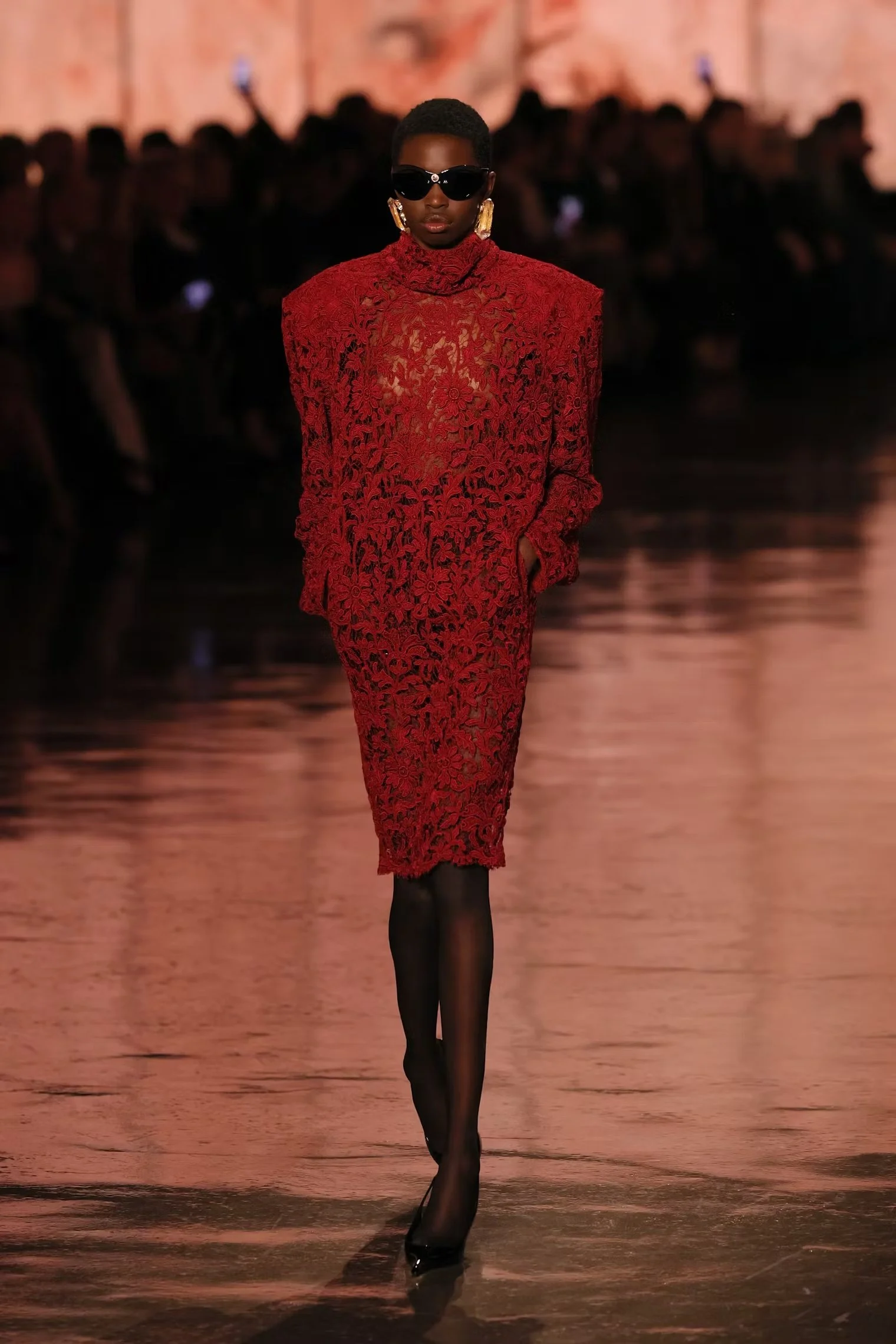
« In Paris, whether on the runway or in magazines, it is frustrating to have only three hairstyle options when White models have an infinite number. »
The Politics of Afro Hair in Fashion: A Never-Ending Battle
The question of length is also a racialized issue.
I stepped into the modeling industry in 2002 in the Caribbean, and in 2007, I signed with a major agency (Women) in Milan. By 2010, I made a radical move: I chopped all my hair off—a close-cropped, 'like a boy' hairstyle. Audacious. Risky at the time.
In that period, short hair on mixed or Black models was practically unheard of. The industry had its unspoken rules: if your hair wasn’t straightened, extended, or hidden under a wig, then it had better fit the 'acceptable' mold—tamed, bouncy, Mediterranean-coded curls. Anything outside those parameters? Unthinkable.
From working with iconic brands like Louis Vuitton, Hermès, Chanel, Prada, Gucci, Victoria Beckham, Gauthier, and L'Oréal (to name a few), to gracing the pages of Vogue, ELLE, Harper's Bazaar, Marie Claire, Dazed, Another Magazine, L'Officiel…(you get the gist), not to mention walking over a hundred runway shows — from Armani to Schiaparelli, Iris Van Herpen, Wales Bonner, and Rahul Mishra (yes, really) — In a decade, I’ve seen it all, done it all.
Fast forward to 2024, I decided to grow my hair out again. Not just for personal reasons, but as a calculated, strategic move: to expand my casting opportunities, tap into the beauty and commercial market. But what I encountered was déjà vu.
Natural-textured hair is still being handled with the same lazy, uninspired approach: slicked into a tightly plastered low bun, pressed down, braided the same style, or brushed into a basic mini afro. Why is the industry still so creatively bankrupt when it comes to Black hair?
Written and Directed by Gilone. Music : Sustain by Sam Gendel
So, I turned the lens on myself because I realized that I didn’t even know how to style my own hair differently. Documenting my hair journey wasn’t just about tracking a new look—it was about raising a bigger question: why has racial representation in fashion progressed faster than hair diversity?
Where are the hairstylists who can sculpt and innovate with afro-textured hair the way they do with European textures? This isn’t just an industry oversight; it’s a failure of artistic vision and, most critically, of education. Our hair isn’t “difficult”—they simply haven’t learned how to work with it. Or worse, they haven’t cared to.
« I would also like to see more teams with knowledge about natural hair. Sometimes, you see a girl with an afro or curly hair, while other girls, with different hair types, get sophisticated hairstyles. But since the hairstylist doesn’t know how to work with afro hair, they simply leave it as it is. It gives the impression of saying, “We don’t know what to do with this hair, so we’ll just leave it like that. »
Before each runway show and photo shoot, the designer collaborates with their creative team and technical team (the head makeup artists and hairstylists) to ensure everything aligns with their artistic vision. Therefore, it’s not about pointing fingers at a single person, but it cannot be ignored that sleek and sophisticated hairstyles often receive more effort and creativity than those for textured hair, which often seem to be relegated to the background.
Indeed, some collections embrace a minimalist or structured style that may influence hairstyle choices, but this does not justify the perpetuation of a few default hairstyles. A Black woman buying these clothes may not want to wear them with cornrows. Why not offer twists, textured buns, a twist-out, vanilles, braided hairstyles, or any of the countless possibilities that afro hair provides? Especially since White models are given natural, effortlessly tousled waves to complement their outfits. Why not grant the same freedom to textured hair?
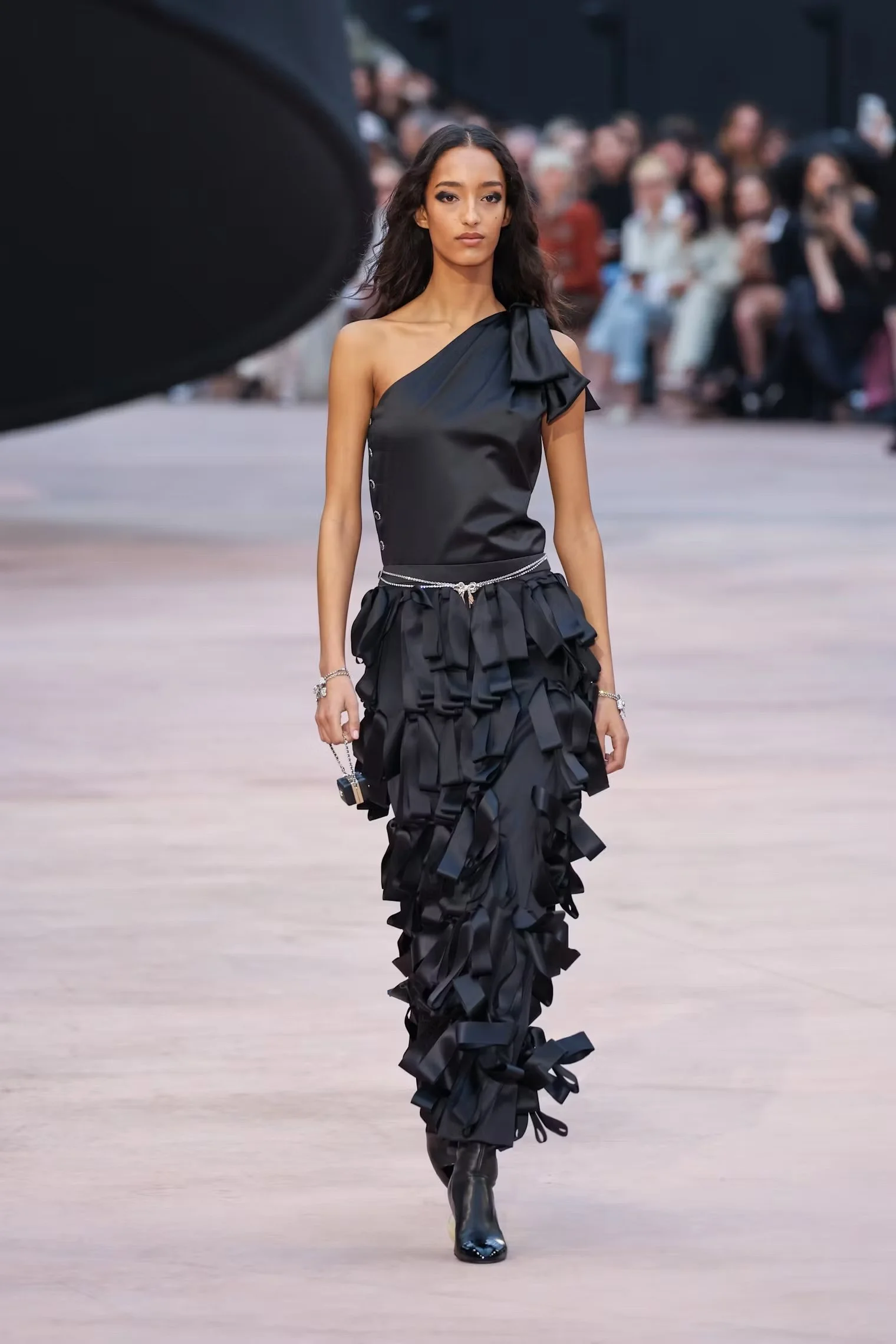
And then, there is also this implicit hierarchy between types of curls. Looser textures may sometimes benefit from the "undone" look, while tighter textures are systematically reduced to compact or slicked-back hairstyles.
Unequal treatment behind the scenes
Before each show, beauty journalists gather around the head hairstylist to hear their explanation of the look of the day. There is always a specific inspiration, whether it comes from a female icon or a bygone era, and a meticulous implementation requiring several steps, products, and tools.
Of course, not all hairstyles can be adapted to all hair textures. But why do some models benefit from complex hairstyles and carefully styled accessories, while others are forced to settle for a minimalist cut?
Every time we ask, "What about the girls with afro hair?", the enthusiastic response is always the same: "We work with their natural texture, not against it." Then come pseudo-innovative terms like "micro-afros" or "finely shrunk curls." The vocabulary is lacking, the knowledge is visibly absent. The discomfort is palpable.
I’ve seen models arrive at rehearsals with gorgeous hair, either down, tied up in high buns, with Bantu Knots, or subtly styled into ponytails. Once they go through the hands of the hairstylists, all of that disappears, slicked back into tight buns, braided into uniform cornrows, or shrunk into neat mini-afros that take up as little space as possible.
Certainly, many Black models have short hair. But for those with longer hair, why must it always be tamed?
Diversity, a façade ?
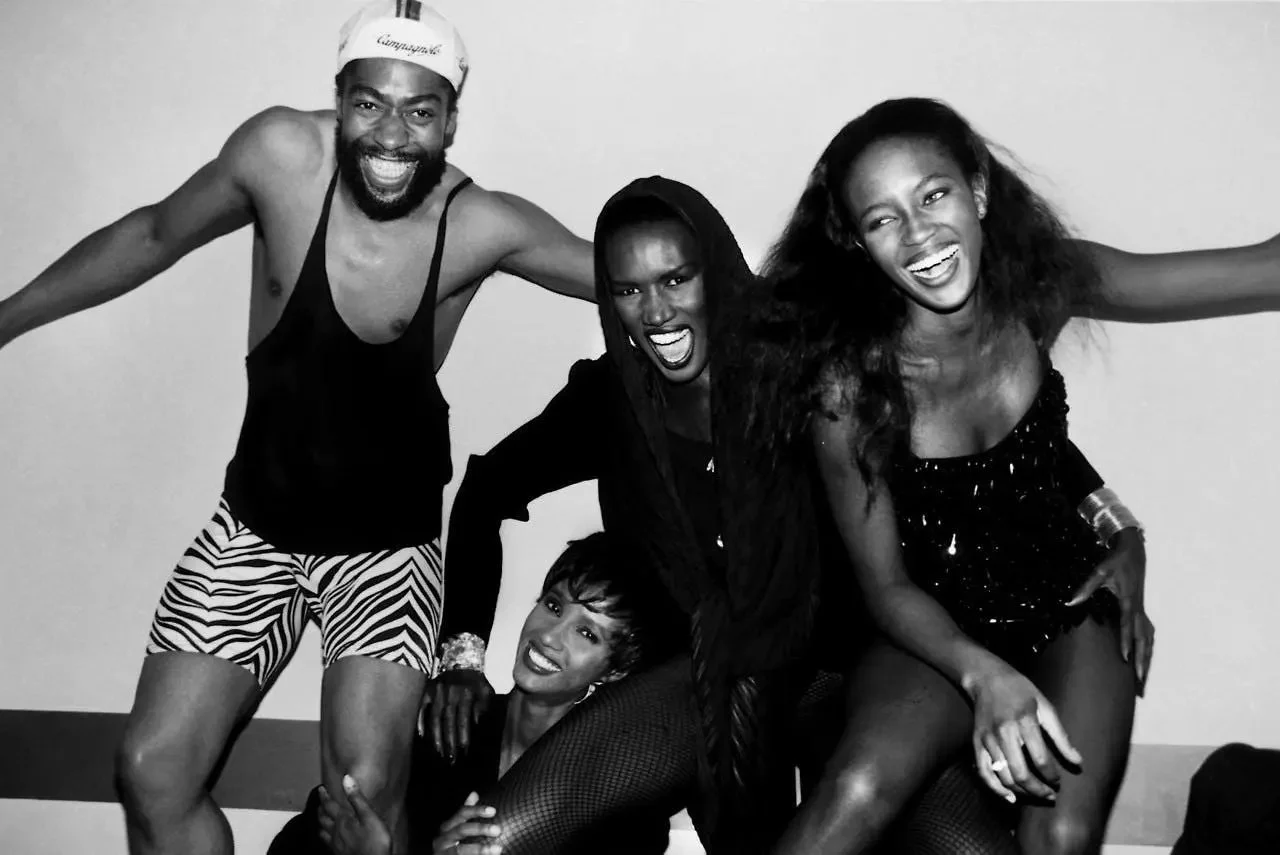
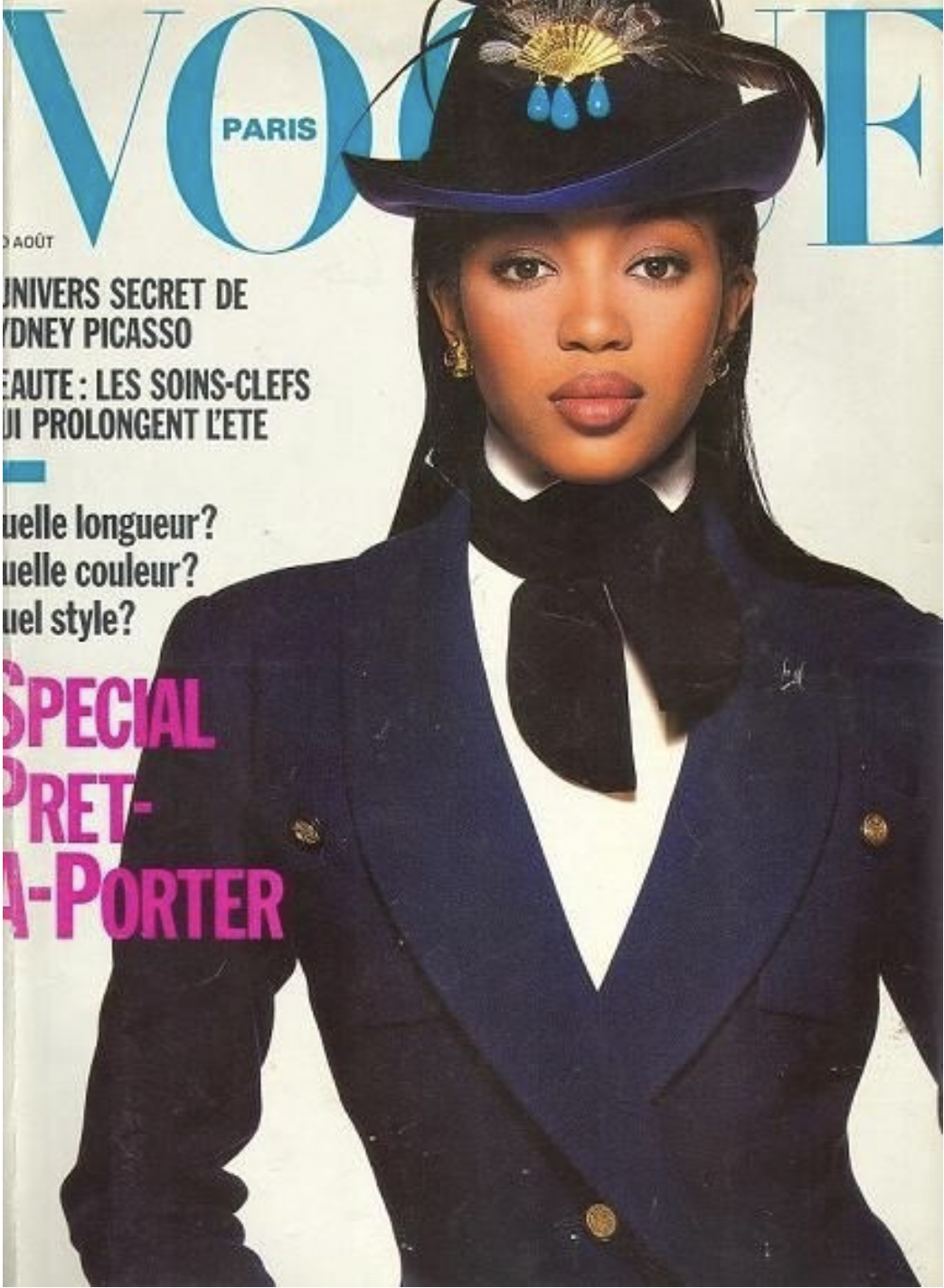
"I feel like diversity is being commodified," says Londone Myers, model and ambassador for Paco Rabanne's Lady Million Empire fragrance. "The industry loves girls with mini afros, in buns and simple braids, but it feels like we're not allowed to wear anything else. It's like a caricature. Imagine if Naomi Campbell had only worn afros throughout her career, instead of embodying a thousand different looks. We need to show all the facets of Black women, not just one."
"When you start out, almost all of us have to have short hair," Myers continues. "Imagine if White models had to shave their heads. They get to wear long hair adorned with pearls and feathers, while we’re stuck with short afros or braids.
Why not draw inspiration from 70s icons like Donna Summer and Diana Ross, with their XXL hair defying gravity? I'm not saying Black women must always have long hair, but why is it always minimized?"
A standard still centered on the West
Many of our notions of "presentability" stem from an Eurocentric standard. And this is evident at Fashion Week. Why must afro hair be contained and disciplined? Why are messy buns and tousled strands praised… but only on sleek textures?
Fashion claims to embrace diversity, but on its own terms. If we want true representation, all hair types must be treated with the same care and creativity. It's time to do the research, bring real afro hair experts into the teams, and stop reducing hair diversity to a handful of standardized looks.
More Fashion Stories
No label, no stylist, no front row. For a generation of independent, racialized artists operating outside the gaze of institutional fashion, image isn’t a privilege — it’s a site of reinvention. Without a costume assigned, they craft a visual presence that’s self-authored, political, and razor-sharp. A closer look.
Jalan & Jibril. Two brothers. One lens. One radical vision. For them, the image is more than aesthetics — it’s an antidote to inner exile. Blurring the lines between photography, cinema, and diasporic identity, their work pulses with intimacy and universality. A relentless pursuit of meaning, of visibility, of self — carved through light and frame.
Fashion Week is hypnotic, but who truly orchestrates the magic? Behind the scenes, an elite group of creative hairstylists shapes the looks that captivate our feeds. They steal the show, yet remain invisible. A spotlight on these legendary talents who stay in the shadows.
In the shadows of the runway, they sculpt faces, set trends, and infuse an unforgettable aura into the most prestigious shows. These genius MUA artists, adored by brands but invisible to the public eye, are the silent architects of beauty. Who are they? Why are their names unknown when their work is everywhere? A deep dive into the secret world of these brush masters the industry can’t get enough of.
A new generation of editors and creative directors is taking the reins, pushing fashion beyond glossy fantasy to tell stories of heritage, identity, and culture. Coming from the margins of an industry that has long ignored their narratives, they are reshaping aesthetic and editorial codes, challenging a system that has been stagnant for too long. Who are they, and how is their vision redefining the way we see—and think about—fashion?
In France, fashion is finally celebrating textured hair, but the boldness is missing. Where are the sculptural hairstyles, the raw cuts, the artistic vision? Diversity doesn't rhyme with uniformity.
Diotima, Wales Bonner, Creole Official, voici mon top 3 des designers préférés de la Caraïbe qui redéfinissent les standards de l'industrie de la mode.
Thrilled to reveal Danseuses, a striking collaboration between Denis Boulze and Charlotte Huguet—where dance and fashion collide in a visceral exploration of the body in motion. A sculptural choreography, captured in stark black and white, stripping everything down to raw form and fluidity. It’s a tension between power and surrender, where every movement speaks, every curve becomes an ephemeral sculpture.
Discover CARTE BLANCHE, a short film by Iris Van Herpen and Julie Gautier, created to showcase her runway show during Paris Fashion Week, where I walk underwater, a first for me. Passionate about freediving, I took on this challenge with excitement. An enchanting dance performance, a tribute to the resilience and strength of women.
A decade in, and this one still feels electric. Shot mere hours before the world hit pause—before silence took over and movement became a memory. The raw, cinematic stillness of the Bardenas desert. The charged quiet before the storm. Slow Down for Blanc Magazine, captured by Melanie Bordas, directed by Marie David. A moment frozen, just before everything changed.
Knack Magazine editorial. Model : Gilone. Photographer : Serge Leblon - assistant : Nicolas Kengen - DA/ stylist : Ilja De Weerdt - assistant : Francis Boesman - MUA : Sofie Van Bouwel. Zanzibar island, Tanzania.
Model : GILONE The Squad Management. ELLE UK magazine. Photographer : Quentin Jones.
Miu Miu and Jacquemus for Lespionne Paris. Photographe : Lubaki Lubaki, model : Virginie Lentulus
Model : Virginie Lentulus, Sofia Fanego for Twin Magazine, october issue - Hanneke Van Leeuwen - Itziar Nzang - Becky Smith - Barcelone.
Model : Virginie Lentulus - Die presse Magazine - Elizaveta Porodina - Bobona Parojcic - Barbara zach
Londres, UK.
Virginie Lentulus : Osman printemps été 2019 (London Fashion week SS 2019) , House of Holland printemps été 2019 (London Fashion week SS 2019), Guy Laroche printemps été 2019 (Paris fashion week SS 2019)
Sunday Times Style, May issue, London. Model : Virginie Lentulus - Photographer : Brendan Freeman
- Styled by Flossie Saaunders - MUA : Yae Pascoe
You will also like
An Afropean generation is already shaping a vital part of contemporary European culture. It produces its images, sounds, codes and narratives. Yet it continues to emerge within a space where the white gaze does more than see: it frames, filters and still decides what becomes legible, legitimate and culturally central.
No label, no stylist, no front row. For a generation of independent, racialized artists operating outside the gaze of institutional fashion, image isn’t a privilege — it’s a site of reinvention. Without a costume assigned, they craft a visual presence that’s self-authored, political, and razor-sharp. A closer look.
Magnetic harpist, singer and choir leader, Sophye Soliveau turns every stage into a ritual space. With Intuition, her debut album, she weaves harp and voice into a groove-infused trance where R’n’B, soul, jazz and gospel collide. A visceral, spellbound album, carried by a rare vocal mastery — part incantation, part liberation.
In the work of Simon Diebold, flesh is no longer just a surface — it’s a battleground, a hallucination, a digital relic, a scream frozen mid-glitch. His art doesn’t just depict bodies; it dissects them, refracts them, reconfigures them into ghostly avatars wandering between the physical and the phantasmagoric.
In a world overwhelmed by cold concepts, Motonaga’s fluid, rebellious colors offer a new, radical aesthetic. His free gestures inspire artists today to reshape reality through color, play, and joy. What if painting like him was already a way to rewire the world?
Jalan & Jibril. Two brothers. One lens. One radical vision. For them, the image is more than aesthetics — it’s an antidote to inner exile. Blurring the lines between photography, cinema, and diasporic identity, their work pulses with intimacy and universality. A relentless pursuit of meaning, of visibility, of self — carved through light and frame.
Screens Multiply, Stories Explode: A New Generation of Filmmakers Erase the Boundaries Between the Dark Room and the White Cube. Video art or cinema? It doesn’t matter. What matters is the explosion of forms.
Hadeer Omar, an Egyptian artist, merges Arab traditions with modern technologies through new media art, including film, photography, and interactive installations. Her work explores identity and memory, using immersive environments and virtual reality to redefine visual storytelling.
Drumming prodigy and a key figure in contemporary jazz, Justin Tyson breaks free from his prestigious collaborations to unveil The Paper Doors, his debut solo album. Blending avant-garde jazz, experimental hip-hop, and minimalist textures, he crafts a bold and immersive sonic universe. A true rhythmic manifesto, this album stands as a defining work of 2025, showcasing the sensitivity and virtuosity of an artist in full ascent.
Artists are at a crossroads: AI, NFTs, and platforms like Metalabel or Indify are reshaping the game. While institutions uphold scarcity, these alternatives promise more equity. But are they truly sustainable? Breaking the system comes with risks.
Danielle McKinney, my favorite contemporary painter, stands out with her striking portraits of Black women, exploring light, solitude, and introspection. Her work, influenced by Caravaggio and Hopper, blends emotion, mystery, and figurative art. Discover her rise, impact in the art world, and radical pursuit of beauty and contemplation.
Fashion Week is hypnotic, but who truly orchestrates the magic? Behind the scenes, an elite group of creative hairstylists shapes the looks that captivate our feeds. They steal the show, yet remain invisible. A spotlight on these legendary talents who stay in the shadows.
Artist, filmmaker, and publisher, Martine Syms deconstructs the codes of pop culture and visual capitalism. Through installations, films, and publications, she explores image, power, and Black identity in an ultra-connected world. A striking body of work, balancing social critique and glitch aesthetics.
A new generation of editors and creative directors is taking the reins, pushing fashion beyond glossy fantasy to tell stories of heritage, identity, and culture. Coming from the margins of an industry that has long ignored their narratives, they are reshaping aesthetic and editorial codes, challenging a system that has been stagnant for too long. Who are they, and how is their vision redefining the way we see—and think about—fashion?
In the shadows of the runway, they sculpt faces, set trends, and infuse an unforgettable aura into the most prestigious shows. These genius MUA artists, adored by brands but invisible to the public eye, are the silent architects of beauty. Who are they? Why are their names unknown when their work is everywhere? A deep dive into the secret world of these brush masters the industry can’t get enough of.
Discover why Dahomey by Mati Diop is much more than a film about the restitution of art—it is a political and social work that questions France’s colonial history. Through her unique vision, Diop embodies the new voice of French cinema, essential for the diaspora and the representation of Black women in the industry.
In France, fashion is finally celebrating textured hair, but the boldness is missing. Where are the sculptural hairstyles, the raw cuts, the artistic vision? Diversity doesn't rhyme with uniformity.
Arthur Jafa is an artistic shockwave. In 2025, Paris will dedicate an exhibition to him at the Bourse de Commerce, showcasing his raw, political, and poetic art. A must-see visual revolution for contemporary art in France.
AS WE RISE, AFROSURF, and IMPOSSIBLE ISLAND by Henry Froy reinvent the visual narrative of Black cultures for the world. Between memory, resistance, and brilliance, these contemporary photographic works capture the soul of a heritage in full resonance. It all starts with an idea.
For SEX IS COMEDY, my voice became part of the soundtrack, opening the doors to a world that is often discreet yet fundamental: that of intimacy coordinators. Through this film, I discovered the importance of this profession, which, far from being anecdotal, is essential for a more respectful and ethical cinema.
Biarritz reveals itself through the elements: the roaring ocean, the whispering wind, the resonating rain. From dawn to dusk, this poem immerses you in the wild yet serene soul of the Basque coast. Between surfing, shifting light, and fleeting moments, let yourself be carried away by the magic of Biarritz, where every hour writes a new emotion.
Discover the original trailer for Queen of the Sea (2023), directed by Kate Cox, where my vocal composition (Gilone) blends with Emilie Rice's musical work, creating a unique sonic experience that combines ambient music and electronic sounds.
Caribbean fashion is making its mark on the international scene thanks to visionary designers who infuse their heritage into their creations. Diotima, Wales Bonner, C.R.E.O.L.E… Discover my top 3.
Slowing down to truly live—this theme inspired my first music video, “Slow Down” from my debut EP, Ocean Call. Self-produced, it invites you on a sensory journey between reality and imagination. Directed by Hamadou Frédéric Baldé, the video captures a poignant connection between me and dancer Kevin Bago as we move fluidly from urban landscapes to the heart of nature whenever our paths cross. Gilone.
Thrilled to reveal Danseuses, a striking collaboration between Denis Boulze and Charlotte Huguet—where dance and fashion collide in a visceral exploration of the body in motion. A sculptural choreography, captured in stark black and white, stripping everything down to raw form and fluidity. It’s a tension between power and surrender, where every movement speaks, every curve becomes an ephemeral sculpture.
Discover CARTE BLANCHE, a short film by Iris Van Herpen and Julie Gautier, created to showcase her runway show during Paris Fashion Week, where I walk underwater, a first for me. Passionate about freediving, I took on this challenge with excitement. An enchanting dance performance, a tribute to the resilience and strength of women.
Jonathan Schmidt, artist and curator, photographed me in Biarritz in 2020. Discover our series, a raw testimony of our budding friendship. His photobook ST GIL, released in 2024, includes two images from this series.
I’m excited to share my first collaboration blending fashion and music as both a singer and model for The Frankie Shop. My track FIGHT accompanies the new UNDERCOVER collection.
Bienvenue ! Mannequin voyageuse, je dévoile mon carnet d'adresses autour du globe, illustré par mes plus beaux clichés. Foodista aguerrie, retrouvez ma sélection de tables gourmandes et mes plus beaux shootings photos autour du monde.
L’Officiel Vietnam. Model : Gilone - Photographer : Camellia Menard